
The Delhi High Court has declined to halt the Centre's HPV immunisation campaign, noting that data on 5.5 million administered vaccines showed no 'instant harm'. However, the court emphasised that 'half-baked vaccines' should not be given to the public and raised 'serious issues' regarding past protocol violations in vaccine testing and certification.

Doctors and researchers are increasingly concerned about the potential link between exposure to polluted air during pregnancy and its influence on foetal development, particularly the male reproductive system. While hypospadias, a common congenital abnormality, is multifactorial, endocrine-disrupting chemicals in air pollution are being investigated for their role. Experts call for more research and advise expectant mothers on preventive measures.

'Control your A, B, C and D.' 'A is A1C, keep your A1C below 7 per cent.' 'B is blood pressure, so keep your blood pressure at 130/ 80 or at least below 140/ 90.' 'C is cholesterol. The bad cholesterol is the LDL cholesterol, and it should be kept below 100, preferably below 70 or 50.' 'D is discipline like diet, exercise, sleep, no smoking, etc.' 'People with diabetes who follow A, B, C and D can live up to even 100 years of age without any complications.'

A hantavirus outbreak on the Dutch vessel MV Hondius has resulted in multiple confirmed cases and fatalities, with Indian nationals among the crew. Health authorities are tracing those who disembarked.

A new study suggests a link between high consumption of ultra-processed foods and reduced fertility in men, slower embryo growth, and smaller yolk sacs.

'Everyone with a low BMI will not get Type 5 diabetes.'
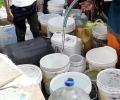
A water quality survey held around Nanded village, the epicentre of Guillain-Barre Syndrome (GBS) in Pune city, has found there was lack of chlorine in the drinking water supplied to households of 26 patients of this nerve disorder, officials said.
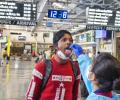
The weekly epidemiological update by WHO revealed the week of December 20-26 saw the global number of new COVID-19 cases increase by 11 per cent as compared to the previous week.

India registered a 13 per cent decrease in new COVID-19 cases in the past week but the number of fresh infections was still the highest around the world, the World Health Organisation has said.

WHO has declared B.1.617 as a "variant of concern" and the update noted that this variant has "increased transmissibility", disease severity is "under investigation", risk of reinfection is "under investigation, possible modest reduction in neutralization activity (B.1.617.1)".

The global number of new cases has been increasing for more than a month, with over 4 million cases reported in the past week - July 26 to August 1, the update said.

A total of 43 districts in India are currently reporting AES cases.
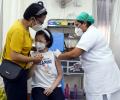
Fresh cases of Covid-19 are again spiking globally, especially in parts of Asia, after several weeks of decline and this rise is "just the tip of the iceberg", World Health Organization Director-General Tedros Adhanom Ghebreyesus has warned.

India reported an 18 per cent decrease in the new COVID-19 cases along with a 13 per cent decline in the number of deaths during the week of October 11 to 17, the World Health Organisation has said, highlighting that all the regions globally, except the European region, reported a fall in new weekly cases of the deadly virus.

The study also examined whether chemotherapy, radiotherapy or surgery, which generate dying cancer cells, could contribute to cancer's metastatic spread.
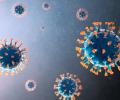
The B.1.617 variant was first detected in India and was divided in three lineages -- B.1.617.1, B.1.617.2 and B.1.617.3.

The World Health Organisation said in its latest update that the XE recombinant (BA.1-BA.2) was first detected in the UK on January 19 and more than 600 sequences have been reported and confirmed since then.
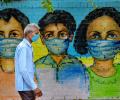
As of July 13, at least 111 countries, territories and areas have reported detection of the Delta variant, and this is expected to continue to increase, becoming the dominant variant globally in the coming months.

There is mounting evidence that suggests that Omicron subvariants -BA.4 and BA.5 - are infecting people who have been vaccinated.

'Using viral genomic sequences from 9,500 COVID-19 patients, the study found an increased number of infections among younger age groups (0-19 years) and women, a lower mean age for infection and symptomatic illness/hospitalisation, higher mortality and more frequent incidences of post-vaccination infections with Delta variant compared to the non-VOC (B.1) variant,' the WHO update said.

A new sub-lineage BA.2.75 of the Omicron variant of the coronavirus has been detected in countries like India and the World Health Organisation is following this, Director-General Tedros Adhanom Ghebreyesus said.

"A recent risk assessment of the situation in India conducted by WHO found that resurgence and acceleration of COVID-19 transmission in India had several potential contributing factors, including increase in the proportion of cases of SARS-CoV-2 variants with potentially increased transmissibility; several religious and political mass gathering events which increased social mixing; and, under use of and reduced adherence to public health and social measures. The exact contributions of these each of these factors on increased transmission in India are not well understood," it said.

"Omicron has been detected in all countries where we have good sequencing and it's likely to be in all countries around the world. It is quickly, in terms of its circulation, overtaking Delta. And so Omicron is becoming the dominant variant that is being detected," Kerkhove said during a virtual questions and answers session.

The WHO said the four current 'Variants of Concern' being monitored closely - Alpha, Beta, Gamma and Delta - are widespread and have been detected in all WHO regions.

The number of new COVID-19 cases increased exponentially by 71 per cent globally during the week December 27-January 2 as compared to the previous week, while the number of new deaths decreased by 10 per cent, the World Health Organisation said on Thursday, as the new Omicron variant led the spike.
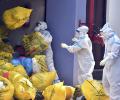
The WHO said that studies have highlighted that the spread of the second wave has been much faster than the first in India.
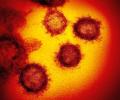
The coronavirus variant B.1.617 first identified in India last year has been classified as a "variant of global concern", with some preliminary studies showing that it spreads more easily, a senior WHO official had said on Monday.

Given the recurring outbreaks in the last five years, the government is considering domestic manufacturing of monoclonal antibodies for treating Nipah virus infections and is in talks with Serum Institute of India, report Shine Jacob and Sohini Das.
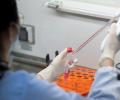
The World Health Organisation (WHO) has classified the EG.5 strain of the SARS-CoV-2 virus circulating in different parts of the world, including India, as a 'variant of interest' but said it did not seem to pose more of a threat to public health than other strains.
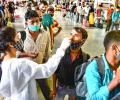
Earlier this week, the top doctors' body in the country, the Indian Medical Association, said the third wave is "inevitable and imminent", pointing out that "in many parts of the country both the government and public are complacent and engaged in mass gatherings without following Covid protocols".

Paluch, Netanyahu's adviser on ultra-Orthodox affairs, tested positive hours after her husband was hospitalised with COVID-19.

The WHO has countries to enhance surveillance and sequencing efforts to better understand circulating SARS-CoV-2 variants, submit complete genome sequences and associated metadata to a publicly available database.
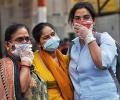
'And that means all of us have to be very careful.'

The reduced severity of Omicron is good news for now, but it is the result of an "evolutionary mistake" as Covid-19 is transmitting very efficiently and there is no reason for it to become milder, indicating that the next variant could be more virulent, a leading Indian-origin scientist from the University of Cambridge has warned.

In the major Indian cities, the Omicron variant of the coronavirus is accounting for more than 50 per cent of the fresh cases of the infection and the massive surge in the number of cases over the last one week is indicative of a third wave of the pandemic, as is being witnessed in several countries, Dr N K Arora, chairman of the COVID-19 working group of the NTAGI, said on Tuesday.

A number of Indian medical experts on Monday supported calls from an eminent British Indian cardiologist for a full safety review into the use of Oxford/AstraZeneca's Covid-19 vaccine, administered in India as Covishield, over feared serious side effects such as heart attack and stroke.
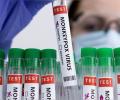
It underlined that anyone can catch the virus if they have had prolonged or repeated contact with an infected individual.
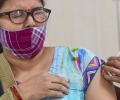
'Vaccination of all remaining unvaccinated at-risk people and consideration of a booster dose for those 40 years of age and over, first targeting the most high-risk / high-exposure may be considered,' the Indian SARS-CoV-2 Genomics Sequencing Consortium (INSACOG) said in its weekly bulletin dated November 29.

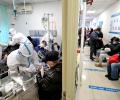
The move comes in the backdrop of a Radio Free Asia report that nearly 250 million people in China may have been affected by COVID-19 in just 20 days after the 'zero-COVID policy' was diluted in the first week of the month.
Foreign ministry spokesperson Mao Ning went on the offensive saying "we do not believe the entry restriction measures some countries have taken against China are science-based".
